


What Drives the Charity Rebrand Reflex?
Why a tiny sector spends so much time and money changing its name and appearance – and what it reveals about us.
Every few months, another charity unveils a bold new logo and a promise to “start a new chapter.” Cue the glossy launch film, a wave of self-congratulatory LinkedIn posts, and the weary sighs of donors who liked things perfectly well as they were.
Charities, universities and museums make up barely three per cent of the UK economy, yet they account for around a third of the visible rebrands handled by major design consultancies. That’s ten times their economic weight. Why do the organisations least able to afford it rebrand the most?
Commercial companies rarely change their names. They evolve logos carefully because brand equity is money in the bank. For charities, brand equity lives in the trust and habits of predominantly older people – and when it comes to legacies, much older people – yet many imitate the marketing approaches of sportswear and digital brands.
The logic seems to be: why don’t young people give to us? It must be because we look old-fashioned. So the image changes – as might the name – in the belief that young people will rush towards them just as they might download a new app or buy new trainers. It ignores both basic human psychology and simple economics. Young people don’t have the disposable income that a comfortable retiree in their seventies does.
But donors aren’t customers. They’re loyal precisely because a brand feels familiar and enduring. When Versus Arthritis rebranded back to a variation of one of its original names, Arthritis UK, in 2025, the charity explained that its previous identity had created a barrier to engagement. The battle-ready language that been exciting to ad agencies had, in practice, alienated older supporters. In online discussions, staff noted that “being a fundraiser for a medical research charity is a tough challenging job then add a brand you always had (to) explain, repeat or spell out to supporters (and it is) soul-destroying.”
Most charity boards contain accountants, lawyers, HR and service specialists – not brand strategists with experience of what happens when a charity rebrands. So when an agency presents a slick deck promising transformation, there’s little challenge. As one former CEO observed, “A rebrand is the only project where everyone gets to have an opinion, and nobody has to own the results – apart from the people we work with.”
In business, a rebrand must be justified by evidence: market data, ROI, and increased value for shareholders. In charities, those numbers rarely exist. Decisions are made on instinct, not insight – often shaped by what the marketing and design press praises as “bold” or “game-changing.” Each award-winning launch comes with familiar soundbites about “the old brand holding us back” and “the need to reach new audiences.”
Take the RSPCA’s 2024 For Every Kind rebrand, which won gold at the Brand Impact Awards and Creative Review’s “Best of Show” accolade. Press releases announced a seven per cent rise in consideration to donate, and donor growth was reported to be “up by 187 per cent” and donations “up by 200 per cent.” Yet in reality, RSPCA income fell from just over £46.5m in 2023 to just under £44.2m in 2024 – a drop of about five per cent, or £2.5m. Adjust for a one-off £3.5m luxury house-draw windfall in 2023 and, yes, 2024’s income is £1m higher than 2022, but the underlying picture is concerning.
On the cost side, fundraising expenditure rose by almost £8m – more than 30 per cent – with an additional £2m spent on campaigns and communications. Where the costs of the rebrand sit is unclear, but the overall spend increased sharply. The return on investment, in pure income terms, did not.
So if donor numbers really grew by 187 per cent and donations by 200 per cent, why no corresponding surge in revenue? Perhaps the costs weren’t part of those headline claims. The broader trend is the same: RSPCA donations and contributions income, even before inflation is taken into account, is still lower than it was in 2015.
That pattern repeats elsewhere. One charity I spoke with recently saw appeal income from its first appeal after a rebrand fall by over 80%. It’s not unusual. Analyse charity finances post-rebrand and you will usually see the same trajectory: income doesn’t rise – it falls.
The data are blunt. Research by nfpSynergy shows that around two-thirds of the public believe charities waste money on branding. Independent analysis of online forums discussing the RSPCA campaign found roughly 60 per cent negative sentiment, dominated by comments such as “waste of money” and “I preferred the old one.” In other cases, I’ve seen negativity climb as high as 80 per cent. For older supporters, a familiar badge is a promise; change that badge, and they start to wonder whether the promise still stands.
Rebrands often come from ego, not strategy. Inside organisations where progress is slow and impact intangible, a rebrand becomes the perfect career project: exciting, creative and visible. When it launches, those involved get the spotlight. When it fails, the damage appears years later, in falling income and redundancy rounds. That imbalance – personal upside, institutional risk – ensures the cycle repeats every few years, usually when new people arrive with a desire to “shake things up” yet again.
Boards compound the problem. Many fail to understand why people give. Fundraising is not advertising. Older donors value continuity, not novelty. Yet boards often park their corporate judgement at the door, persuaded that minimalism equals credibility – even when it strips away the warmth and humanity that drew supporters in the first place. As one loyal donor told us in research, “I liked them because they felt human. Now they look like a bank.”
Few charities link brand tracking to actual donation data. Instead, they rely on general awareness or brand positivity metrics – what everyone thinks, not what donors do. Without evidence, the urge to refresh becomes contagious. It feels dynamic – new colours, new fonts, new hope – but the outcomes are rarely measured against giving or trust.
Some organisations do get it right. Battersea Dogs & Cats Home modernised without alienating its base, gaining new reach simply by adding “cats” to the name – proof that relevance doesn’t have to mean rupture. And years ago, when I worked with the Parkinson’s Disease Society as it rebranded to Parkinson’s UK, we focused relentlessly on donor experience – making sure supporters felt part of the change, not confused by it. Income rose as a result. But those seem to be some of the exceptions. In most cases, a rebrand erects a barrier between donor and cause. It disrupts relationships rather than renewing them.
Governance is the difference. Management teams and boards that treat identity as a strategic asset – not a creative playground – make better choices. Before approving a rebrand, they should demand answers to five questions:
- What problem will this solve - and how?
- What will the impact be on our current supporters (especially for organisations dependent on legacy income)?
- What evidence shows that the current brand is failing with our key constituency?
- How might we better use the money to improve fundraising?
- And finally, how will we measure success in a year’s time?
If those answers don’t exist, the answer is simple: don’t rebrand.
Charities rebrand more than any other sector not because they are brave, but because they are, perhaps, trusting and unguarded. I don’t understand why, considering the experience many brand agencies and consultants have, so many charities still move ahead with rebrands. Don’t these agencies stay in touch with clients after the work is done? Don’t they warn new clients about the financial risks?
Add to that the misplaced envy of the private sector and the career incentives of a high-profile rebrand, and the process becomes a self-reinforcing ritual. The results are usually predictable: donors confused, trust dented, and money diverted from front-line work to design decks.
Don’t get me wrong – branding matters. It shapes how causes are understood and what people feel about them. But stewardship matters more. And stewardship begins with humility: recognising that the key audience for most charities is older people, who value continuity, clarity and care more than cleverness.
Until the sector accepts that truth – that we’re not in the “lifestyle business” but in the life-changing business, where trust matters more than anything – charities will keep chasing the wrong kind of change and learning the same expensive lesson all over again.
When a charity rebrands, that’s not the end of the journey – it’s the start of the hard work. If you really do need to rebrand, prepare for a difficult road ahead. Your goal after launch is to make the donors you already have love your new brand as much – if not more – than the old one. That doesn’t happen overnight. It takes years of effort, patience, and genuine engagement – work that fundraisers understand far better than designers.
If you must rebrand, plan for that hard work. Success doesn’t come from handing over a brand to the fundraising team and thinking “job done”. Build the post-launch donor strategy into your budget. Expect income to fall before it rises. Accept that you’ll need more resources to keep and engage your supporters – and that it may take years to embed a new brand. The fact is, when you change, it takes time to earn trust back.

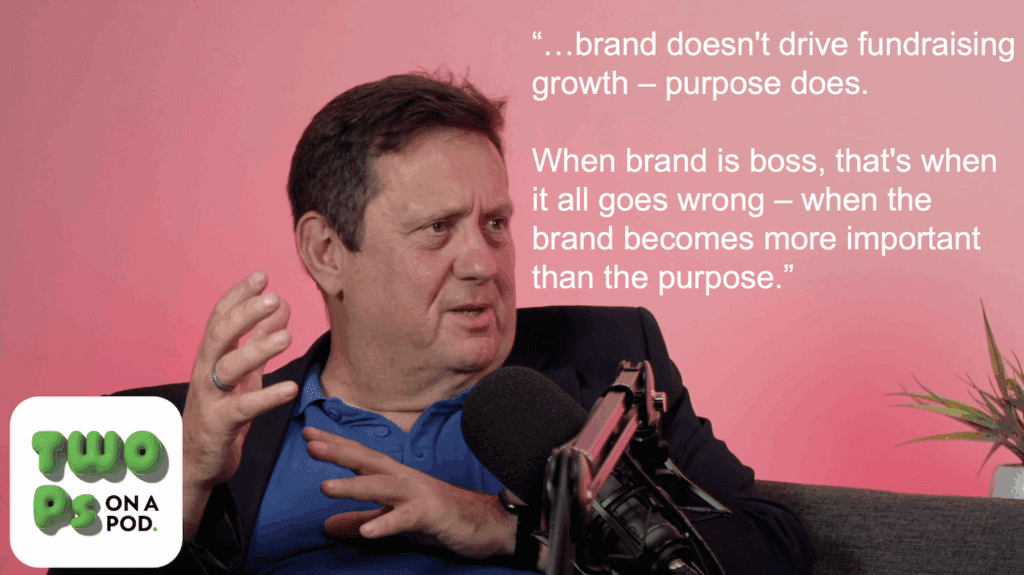



The Essentials

Crack the Code to Regular Giving: Insights, Strategies, and a Special Giveaway!
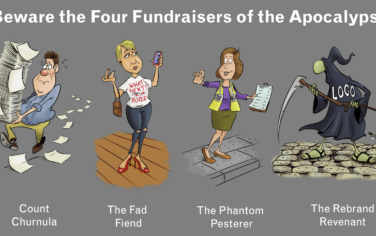
‘Tis Halloween. Keep to the light and beware the Four Fundraisers of the Apocalypse!
Why do people give? The Donor Participation Project with Louis Diez.
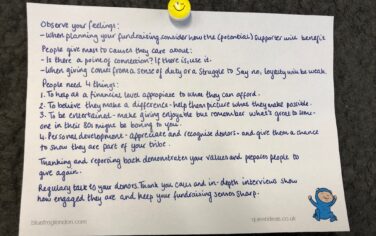
A guide to fundraising on the back of a postcard
What does the latest research tell us about the state of fundraising?